Saturday, September 26, 2009

I Dwell In Possibility

I stood in my backyard this morning and soaked up the Colorado sunshine, seeking a remedy for my continuing melancholy. Focusing on the present is a cure, as is Emily Dickinson’s suggestion: “Dwell in Possibility” per the black magnet with white script posted on the side of our refrigerator. Is the idea of dwelling in possibility in conflict with the idea of focusing on the present? Some say that the phrase reflects Emily’s reclusiveness and isolation; she lived her life isolated in her imagination, and had little contact with real people and situations. But I’ve always preferred to interpret it ultimately as an expression of the same kind of hopefulness and optimism expressed by Helen Keller: “When one door of happiness closes, another opens; but often we look so long at the closed door that we do not see the one which has been opened for us.”

The world always offers new possibilities for love, life, learning – we have to be open-minded enough to seize them.

On our walk this morning M shared the shocking news that “carpe diem” does not mean “seize the day” at all in strict Latin translation, but instead means “pluck the day,” as in plucking a flower.  Who knew? But now that I know the truth, it seems that “pluck,” as in “enjoy, make use of,” is perhaps better than “seize,” which has a rather militaristic, possessive, muscling-others-out-of-the-way ring to it.

Today I feel a weariness and lingering sense of lost purpose after a week-long business trip to the Emerald City in the Valley of Silicon looking for heart, brains, courage and a path homeward. My next magical trick is to focus on the present, and pluck the day.

Sunday, September 20, 2009

Little Old Lady Ninja

The blues come on little rat feet…apologies to Carl Sandburg. I have been pondering new ways to avoid the Sunday night blues after a particularly bad bout with the Sunday night blues last weekend.

The other night I was vegetating on the couch with my feet up reading junk fiction after a long day fighting dragons and tilting against windmills at work.  I was wearing my black satin pajamas, and as I rose smoothly (hah!) to get myself a cup of tea my husband remarked that I looked like a “little old lady ninja” in those black pjs.

Okay, I’ll take that. My goal as I get older is to remain strong in body and spirit, at the ready to fight the demons and dragons found mainly in my own imaginings. Better this than a feeble old lady in a flannel nightgown.

The Sunday night blues is one of my demons. Every Monday morning at work when I ask people how their weekends went they say “Great—but too short.” (I am excepting of course those who have worked all weekend).

I’m pretty sure many people of all stripes fight the Sunday night blues. There are many blogs and articles with tips on how to beat them, from distracting oneself with non-stop activity, to planning some special treat for Monday morning, to meditation, to sunshine and exercise. As a matter of fact, it’s a gorgeous, sunny, September Sunday here in Boulder. Revel in it, I say! The ultimate trick I have is pure determination—to just be hell bent on wringing every last drop of joy out of each moment, Sunday or no. So - fight back against the Sunday blues like a little old lady ninja—and if it helps, imagine me: black-clad, feet planted, hands raised, staring down the demon blues in mock ferocity.

Saturday, September 12, 2009

Synecdoche

I saw Charlie Kaufman’s film “Synecdoche, New York” last night – a complex, image-rich movie about a playwright in a severe mid-life crisis, trying to find truth in his work and relationships. The term “synecdoche” is interesting: it is a type of metaphor in which either part of something is used to refer to the whole thing, or a general class of thing is used to refer to a part or a sub-class of the whole. One example of synecdoche is the usage of a single characteristic to distinguish a fictional character—e.g. calling a character “Bright Eyes” or “Brown Shoes” – usually done when the observer doesn’t know or care what the name of the other character is. Other examples might be “suit” for a businessman, or worse “empty suit” for an incompetent businessman, or “gray hair” for an older person. I remember once at work recently talking to a large financial customer about their mainframe applications and requirements and asking who in their company could tell me more about their current needs. “You mean the gray hairs?” responded the brash young New Yorker. Ah well.
Another example is Shakespeare’s “All the world’s a stage, and all the men and women merely players."
Anyhow, as I apply this to the film, the main character Caden Cotard (played by the gifted Philip Seymour Hoffman) is a playwright who has had some level of success in regional theater in Schenectady, NY (get it? Schenectady/Synecdoche). He is suffering from a mid-life crisis in which everything seems to be falling apart including his own body and his relationships with his wife and daughter. By the way, Cotard’s Syndrome is a mental illness in which a person has the delusion that he is already dead. Although his wife takes their daughter and leaves him, Caden ends up winning a monetary award that lets him work on his masterpiece play. As the film progresses there are more and more dream-like sequences—he hires actors for his new play, but then seems to be hiring actors to play the roles of important people in his real life. Eventually he finds an actor to play his own role, and with greater insight than he himself seems to have.

The love of Caden’s life is Hazel, who lives in a house that is always smoke-filled and burning. Even when we see her purchase the house she thinks aloud with the realtor about whether she will end up dying in the fire—strolling contemplatively from room to room as flames flicker through a window or in a corner.

Caden’s four-year-old daughter Olive, who he loves dearly, remains four in his mind long after his wife and her lesbian lover have spirited her off to Germany and she has grown up to be a tattooed erotic dancer whose flower tattoos are dying as she does and who has, inexplicably, a German accent. In the end, each character including Caden himself is defined by a particular characteristic (here’s one of many cases where synecdoches seem to come in) but at the same time we see how limiting and artificial those definitions are, and that in reality each character has layers and depths that we can only begin to understand. A few words in shorthand from the director to tell the actors who they are or how to be seem more and more inadequate.

I think Caden in his mid-life crisis feels trapped by these limitations he has applied to himself and others around him. In the end of the movie when he’s much older as is Hazel, there is a beautiful, golden scene in which they are briefly able to move beyond these limitations and their love shines through. But of course life is short and there is a price to pay for choosing to live in a smoke-filled house afire, or loving someone who does. They only grasp what is truly important and real at the last possible moment.

Eventually, Caden takes on the role of his ex-wife’s cleaning lady Ellen, and the actress who was playing this role becomes the director, guiding his actions through a small earpiece he’s been provided. The last instruction he gets is simply, “Die.”

Let me make it clear that these observations only touch the surface of what is going on in this very complex film – it is definitely worth seeing and will generate some good conversation.

Saturday, September 5, 2009

Smoking

Mad Men,” a TV show about a male-dominated Madison Avenue advertising firm in the early 60’s, is true to the era with many of the characters perpetually smoking—in the office, in bed after sex, in restaurants. In modern day this pervasiveness of cigarettes is jarring. But back then it was totally acceptable to smoke pretty much anywhere: in the car, in elevators, in small conference rooms or offices at work, after dinner with your children, on airplanes, even in hospital waiting rooms.

As kids we used to suffer riding in the smoky family station wagon in winter with the windows cracked just a little to “let out the smoke.” Sparks would fly out the front side windows and into the back side windows and our eyes.  My sisters both ended up in the hospital more than once with pneumonia, heart ailments and other complications that were surely exacerbated by secondhand smoke. My parents and practically every other adult we knew in the 50’s and 60’s didn’t know any better. They smoked all their lives. During World War II my Dad, in his early 20’s, smoked to help calm his nerves and garner some measure of comfort in a place where one of his jobs was defusing landmines. After dinner each evening my parents sat out back smoking and talking while the kids did the dishes, the orange glow of their cigarettes all you saw in the darkness on the back porch. It was so much a part of them that today with both of them gone now for many years, the smell of cigarette smoke, while onerous, also makes me remember and miss them.

But I also remember my mother often saying that smoking was “a nasty habit,” one she wished she had never started; she was talked into trying it by her best friend Nell when they were in their early teens, and it hooked her immediately. Right after her retirement Mom found out she had emphysema and quit smoking; the next 7 years before her death she suffered a great deal, struggling more and more for each breath she took, puffing medications from a machine to help clear her bronchial tubes, volunteering her time to educate others on how to quit smoking and why they should. She did not complain, and attributed all her suffering to the terrible mistake of taking that first puff.

My father never did give it up—the addiction was too strong—even though the doctor told him repeatedly it was killing him and that smoking around my mother, whom he loved dearly, was also killing her. He once told me after a failed attempt to quit that resulted in a serious depression that quitting was like losing his best friend.

In February 2001, as Dad sat outside in a wheelchair on the hospital loading dock while we waited for the ambulance to come and take him to the nursing home where he died a few days later, he had a single request: would I give him a smoke. Awkwardly (since I never in my life even touched a cigarette, my mother having taught me well), I pulled a Camel out of the pack, managed to light it, and handed it over so he could take a few puffs. His look of pure relief and gratitude made me feel like we were sharing a moment’s respite in some cold Belgian foxhole in the winter of ‘45, and perhaps in one part of his mind we were.

Sunday, August 30, 2009

If All Else Fails, At Least I Can Serve As a Horrible Example

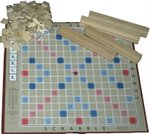
My father worked at the RCA plant in Bloomington, Indiana for many years where they built television sets for a grateful nation. I am still not quite sure what my Dad did there, but it had something to do with parts inventory and quality control. When I was in my early teens he would sit at our dining room table poring over computer printouts listing part numbers, cross-checking them against other lists he had neatly hand-printed on separate sheets of paper. I would sometimes help him with this cross-checking task, and he taught me how to read out the part numbers in just the right way to make his part of the job easier. After a hard night’s work we would turn to Scrabble to take our minds off anxieties about the day to come.

Although he rarely showed it directly, he was frustrated by his work, and often felt that managers above him were not listening, or not intelligent enough to understand his ideas about how to proactively prevent one of the most catastrophic things that can happen on a moving electronics assembly line—unexpectedly running out of a part. Although computers were clearly used in this operation, it seems somehow that they weren’t used effectively, and parts shortages or shipments of poor quality unusable parts happened frequently enough to cause a good degree of heartburn. It was only later when over a couple of summers I actually worked the assembly lines to earn money for college that I got a fuller sense of the direct impact of parts outages on operations (as well as a clear object lesson in why a college education was essential if I didn't want to continue in a similar line of work). Imagine Lucy and Ethel in the chocolate factory when the line goes out of control and substitute circuit boards and silvery hot solder baths.

I think my Dad suffered from the same curse I suffer from at work today, likely an inherited trait—strong fear of inadequacy and failure. One of his coping techniques was to utter the following ironic mantra: “If all else fails, at least I can serve as a horrible example.” He actually spoke these words sardonically to his management at times--using the horrible example phrase when all other methods of selling his ideas had failed. In so doing he revealed himself as far more of a rebel than I ever had the guts to be. The searing need to bring high value to your work every day can overwhelm to the point where no accomplishment is ever good enough. Like any other overpowering need, it can be crippling. Demanding perfection from yourself can set you up for constant failure in your own mind.

But hell—at the end of the day if all else fails, at least I can serve as a horrible example.

Sunday, August 23, 2009

Pretty Little Feet

Each summer when we were young, my Mom’s mother would fly out from California for a few weeks to visit. We got to go to the airport (which had a very exciting ride called an “escalator”) to pick her up. To make room in the tiny Ellettsville house, my brother would move out of his room into the garage to sleep, the garage door rolled open to the summer air. I slept out there also to keep him company, and my mother made things cozy with an old oval rag rug, reading lamps, and late night snacks.

Granny, whose first name was the very old fashioned Hazel, would arrive with her small suitcase--a sturdy woman with silver-gray hair who without fail enjoyed a daily solitary morning walk through the neighborhood in her sensible size 9 shoes. She was a widow; my Grandpa had died when I was only two. Granny never raised her voice to us, and yet somehow even an expression of mild disappoint from her would bring us to despair, so we were always on our best behavior for her visits. If we behaved particularly well, we could expect to be treated to a Chinese restaurant dinner in Bloomington with fortune cookies and sherbert for dessert.

Once when I was sitting next to Granny on the couch with my bare feet propped up on a chair in front of me, she glanced down and said, “You have such pretty little feet,” a compliment that made me inexplicably happy. And despite the fact that I cannot claim any credit for the feet I was born with and the more prominent fact that my feet are less than extraordinary, I have never forgotten this positive comment. Forty-six years later as I look down at my enameled toes and lightly tanned feet each summer her words come back to me and give me a small measure of happiness—a great lesson in how much influence a single kindness can have on a child throughout his or her life.

Sunday, August 16, 2009

Firefighter

In the Indiana summer of 1963, I’m almost ten and my brother Paul is eight. The babysitter Gloria watches TV in the living room as usual, and in the backyard the neighborhood boys find creative new ways to kill the giant spotted gray slugs that emerge on the back porch after each summer rain. Everybody knows that pouring salt on them makes them melt like the Wicked Witch after Dorothy tosses water on her; but what about the Witch’s Scarecrow tactic—fire? The bigger boys have matches, and there’s plenty of lawnmower gasoline.

The next thing we know my brother is rolling around on the ground, one denim pant leg on fire, screaming. I have wished many times I knew all the tricks I know now about treating burns, but back then we had only Gloria, a frightened thirteen year old who won’t call our parents because she doesn’t want to piss them off, and who thinks maybe butter will help. My brother lies on the couch in agony, with giant blisters three and four inches long rising on his leg. Eventually, my parents arrive home and take him to the hospital.

My brother was a frequent flyer in the ER. He had more energy than other kids. He could never sit still in school, could never do what he was told, mercilessly teased my younger sisters with taunts, hands wiggling in their faces, and more. He had a lot of trouble sleeping. He liked to play with knives and fire. My father said he “only learned things the hard way.”
He was bipolar—and in 1963 nobody in our circles knew much about that, or about therapy or lithium. So there were many trips to the ER, and when he got older there were trips of another kind, as he sampled every drug he could get his hands on, perhaps unconsciously seeking some relief or control for his wild energy.

He never teased me. My fate instead was to be the responsible firstborn, trying and failing to keep the younger sisters safe from him, trying to keep him safe from himself, flushing the acid he got in high school down the toilet, talking him down, picking him up, helping him out, loving him nevertheless, appreciating the good things—his wit, his music. I fought the fires the best I could, and there was a lot I didn’t know then that I know now.

Suicide attempts, pharmacy scams to get prescription drugs, prison assault, drama, insanity followed over the years—fires galore. There came a day when I began to truly understand that some fires burn so fiercely that the best firefighter is powerless to contain them. A few months later, shortly after he turned fifty, my brother moved into a lonely little apartment he was provided when his name came up on the waiting list after various agencies finally acknowledged he was too sick to support himself. He adopted a stray cat. He had many visitors, but few friends. One Saturday night he sat down in a blue armchair he had found for himself that was a lot like the blue chair I used to have in my living room years ago—and he shot up enough methadone to stop his heart forever.

It was only then that his pain and my firefighting on his behalf ceased.